
Political violence and anti-system voting in interwar Italy
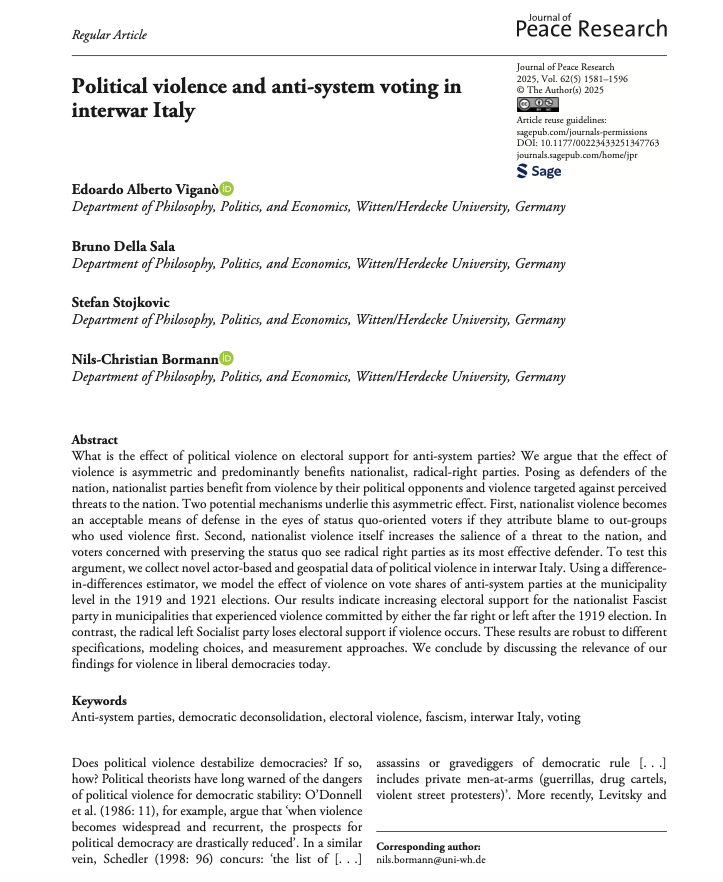
What is the effect of political violence on electoral support for anti-system parties? We argue that the effect of violence is asymmetric and predominantly benefits nationalist, radical-right parties. Posing as defenders of the nation, nationalist parties benefit from violence by their political opponents and violence targeted against perceived threats to the nation. Two potential mechanisms […]
Polarization, fragmentation, and democratic deconsolidation in interwar Europe
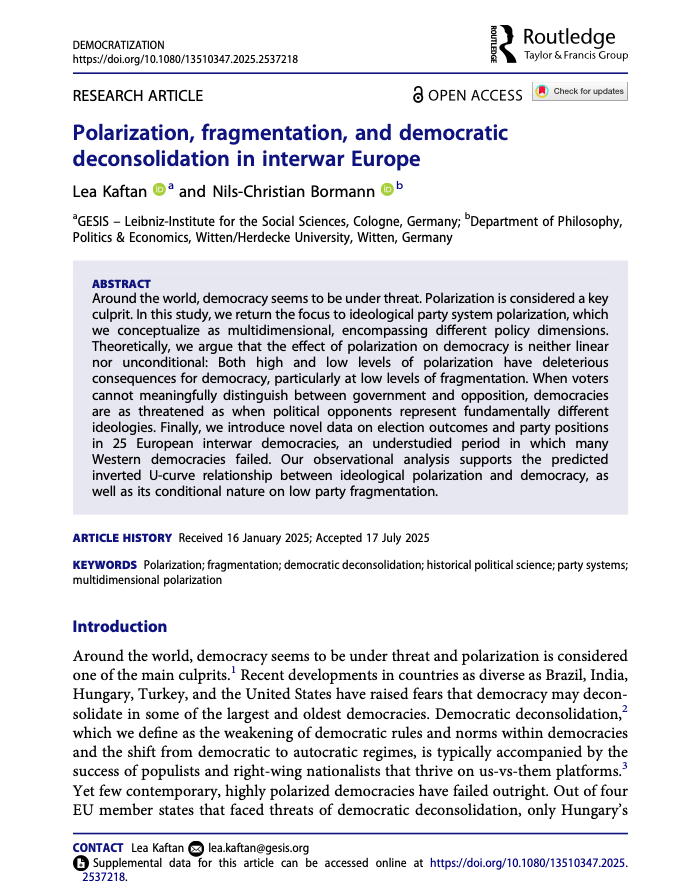
Around the world, democracy seems to be under threat. Polarization is considered a key culprit. In this study, we return the focus to ideological party system polarization, which we conceptualize as multidimensional, encompassing different policy dimensions. Theoretically, we argue that the effect of polarization on democracy is neither linear nor unconditional: Both high and low […]
Introducing the Archive of Interwar Europe Election Data & Assemblies (AIEEDA)
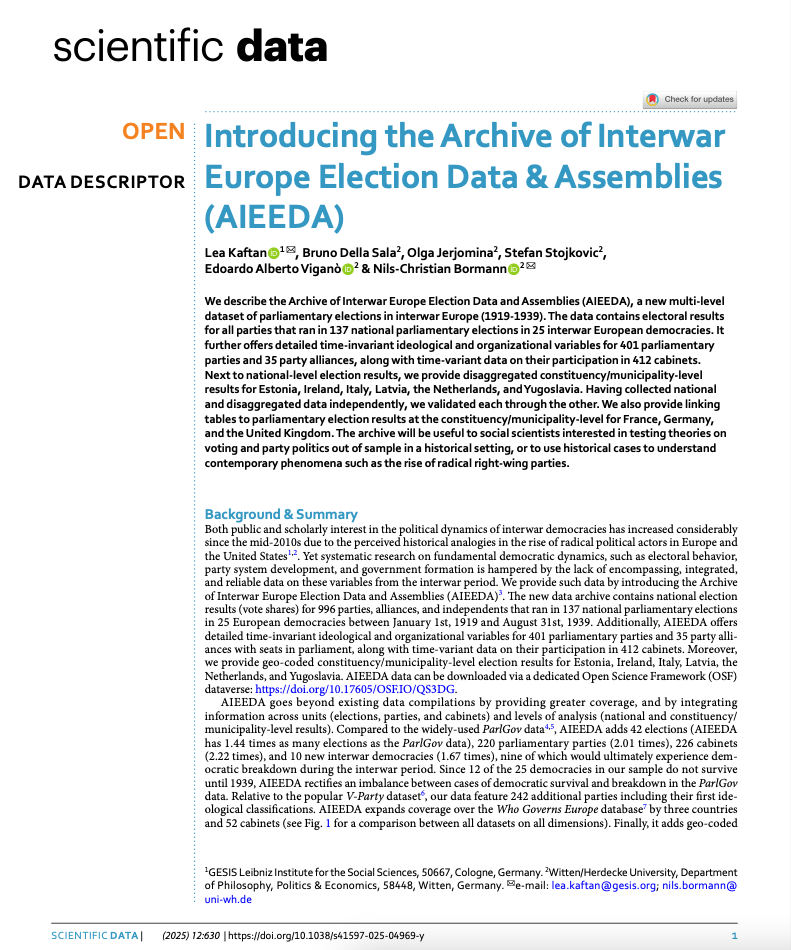
We describe the Archive of Interwar Europe Election Data and Assemblies (AIEEDA), a new multi-level dataset of parliamentary elections in interwar Europe (1919-1939). The data contains electoral results for all parties that ran in 137 national parliamentary elections in 25 interwar European democracies. It further offers detailed time-invariant ideological and organizational variables for 401 parliamentary […]
Introducing the Democratic Electoral Systems data, 1919-1945
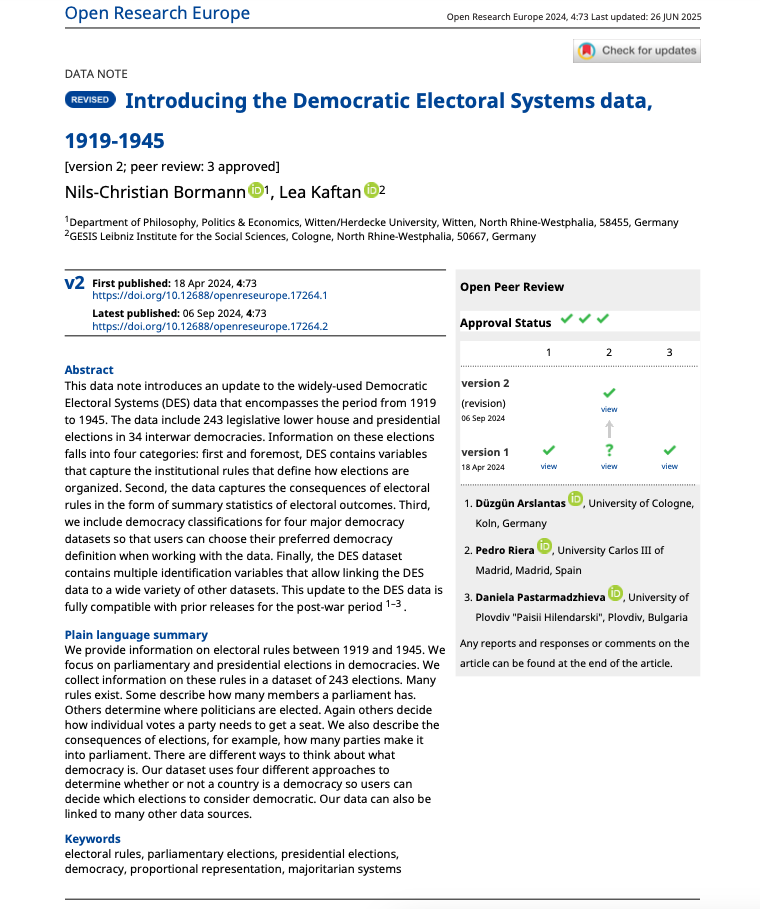
This data note introduces an update to the widely-used Democratic Electoral Systems (DES) data that encompasses the period from 1919 to 1945. The data include 243 legislative lower house and presidential elections in 34 interwar democracies. Information on these elections falls into four categories: first and foremost, DES contains variables that capture the institutional rules […]
Local Ethnic Demography and Ethnonationalist Voting: Evidence from Interwar Yugoslavia
The study explores the impact of local ethnic demography on ethnic voting, focusing on an understudied democratic experiment in Southeastern Europe during the 1920s—Yugoslavia. Using original data on 378 counties across four parliamentary elections, the study tests two competing hypotheses regarding inter-ethnic contact between Serbs and Croatians: the threat hypothesis and the contact hypothesis. The […]